A Jewish Philosophy for the Real World
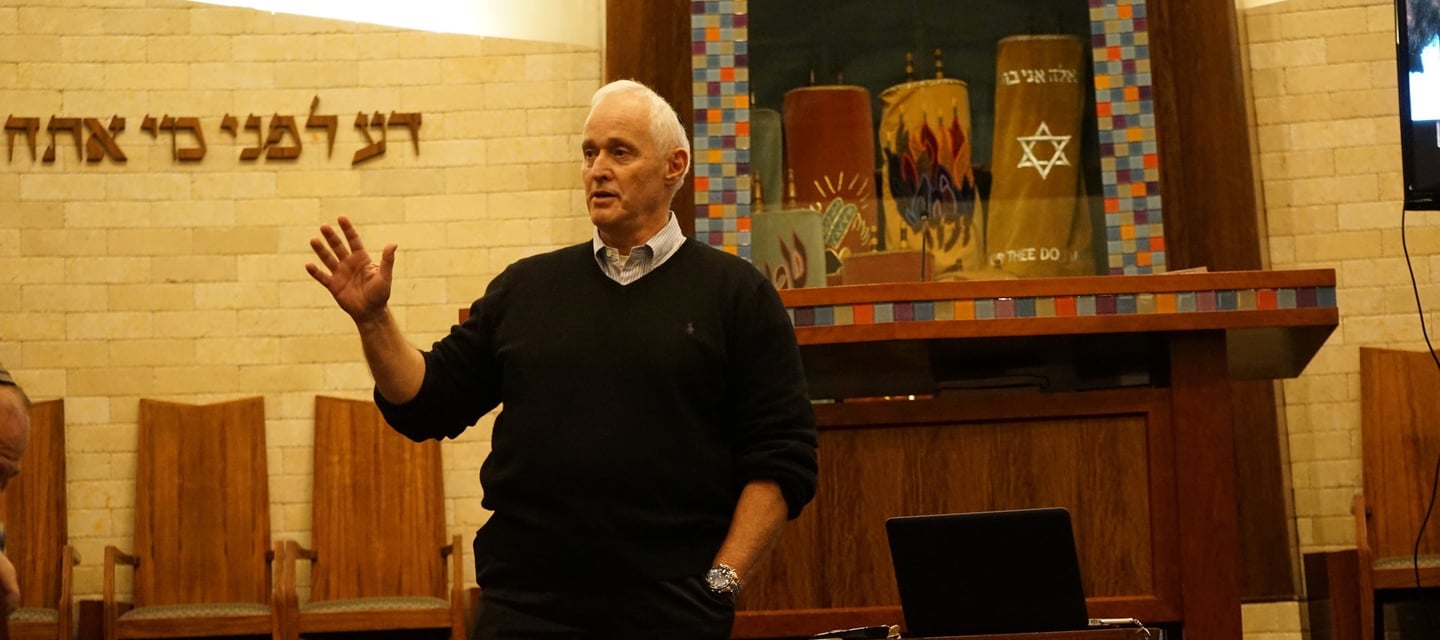
The 21st Century Jewish Philosophy of Rabbi Moshe Pitchon
Most discussions about Judaism begin with God, revelation, belief, religious law, or Jewish identity.
My work approaches Judaism from a different point of departure.
It asks how Judaism helps human beings respond to reality.
Reality precedes every theology, philosophy, religion, and ideology. Human beings do not first believe and then enter reality. They are born into it. Before they formulate ideas about God, they encounter a world that continually places demands upon them.
Birth and death, illness and health, love and loss, freedom and limitation, discovery and failure—all arrive without asking our consent.
To exist is to be confronted.
The TaNaKh (Bible) reflects this orientation. It is less concerned with defining reality than with forming human beings capable of responding faithfully to the situations reality places before them.
My work therefore asks a single question:
How does Judaism help human beings respond to reality?
I do not understand Judaism primarily as a system of beliefs, a fixed collection of doctrines, or even as a religious identity. I understand it functionally, by what it does.
Judaism is the ongoing work of discerning reality and transmitting the capacity to respond to it adequately.
A physician must respond medically to illness. An engineer must respond technically to structural failure. A judge must respond juridically to conflict. A statesman must respond politically to historical change. In every case, the first question is not whether the response is traditional or innovative, but whether it is adequate to reality.
Judaism belongs to this same human order. It preserves not a collection of ready-made answers, but a tradition of cultivating responses adequate to reality—one it has been refining for three thousand years.
Biblical Judaism was always concerned with reality, even though it spoke in the conceptual language available to its own age. The absence of the modern word reality from the Hebrew Bible does not mean that the concept was absent. The biblical authors lacked our conceptual vocabulary, but they grappled with the same reality that confronts us today.
Reality, as they understood it, cannot be reduced to mere physical existence. It generates life, imposes limits, creates possibilities, confronts human beings with demands, and makes response unavoidable.
They gave that comprehensive reality its name: God.
The word God is therefore not the beginning of Jewish thought. It is Judaism's name for reality understood in its fullest dimensions.
Seen from this perspective, the opening pages of Genesis- the first book of the Torah- acquire a different significance.
The first utterance addressed to a human being is not a command but a question:
Ayeka — "Where are you?"
This is not a request for geographical information. Its purpose is to bring forth a response.
Ayeka is the moment in which reality addresses the human being. It confronts the person with the necessity of answering for oneself, one's actions, and one's place within reality.
Biblical Judaism recognized was not simply that human beings exist, but that human existence is inherently answerable because reality continually calls for a response.
The human answer is equally brief:
Hineni — "Here I am."
Hineni is not information. It is the acceptance of answerability. It is the acknowledgment that one stands before reality ready to exercise the distinctly human capacity to respond.
Between Ayeka and Hineni unfolds the entire dynamic of Judaism: reality addresses the human being, and the human being answers.
Judaism did not create humanity's capacity to respond to reality. It gave that universal human capacity one of its deepest articulations.
This understanding also changes how we think about the Jewish past.
The value of Judaism does not lie in repeating ancient answers. Its value lies in preserving and continually refining humanity's ability to generate responses adequate to the questions reality poses in every age.
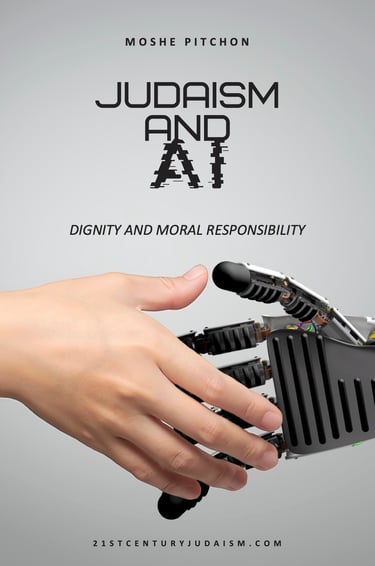
The twenty-first century confronts humanity with realities unlike any that preceded it: artificial intelligence, biotechnology, unprecedented technological power, global interdependence, demographic transformation, and profound political and cultural change.
The defining challenge is no longer simply to preserve inherited traditions.
It is to generate responses adequate to realities that no previous generation has encountered.
For that reason, the vitality of Judaism is measured not by its fidelity to yesterday's answers, but by its capacity to generate responses adequate to the questions reality is asking today.
This is the philosophical foundation of my work on Judaism, human existence, leadership, artificial intelligence, ethics, and contemporary Jewish life.
The question remains the same.
Reality asks.
Human beings must answer.
Books by Rabbi Moshe Pitchon
Available online and in print worldwide